
2026 Reducer Industry: High-end Breakthrough & Domestic Substitution

As a core part of industrial transmission systems, reducers realize speed reduction, torque boosting and speed matching, and improve control accuracy. They are regarded as the power heart of intelligent manufacturing, industrial robots and new energy industrial equipment. China’s reducer market scale reached 152 billion yuan in 2025 and is estimated to hit 167.2 billion yuan in 2026. The industry faces structural contradiction featuring shortage of high-end precision products and surplus of mid-to-low-end conventional products. This paper elaborates the industrial development from five aspects: market status, core technologies, application scenarios, domestic breakthroughs and future trends, providing reference for industrial upgrading and product selection.
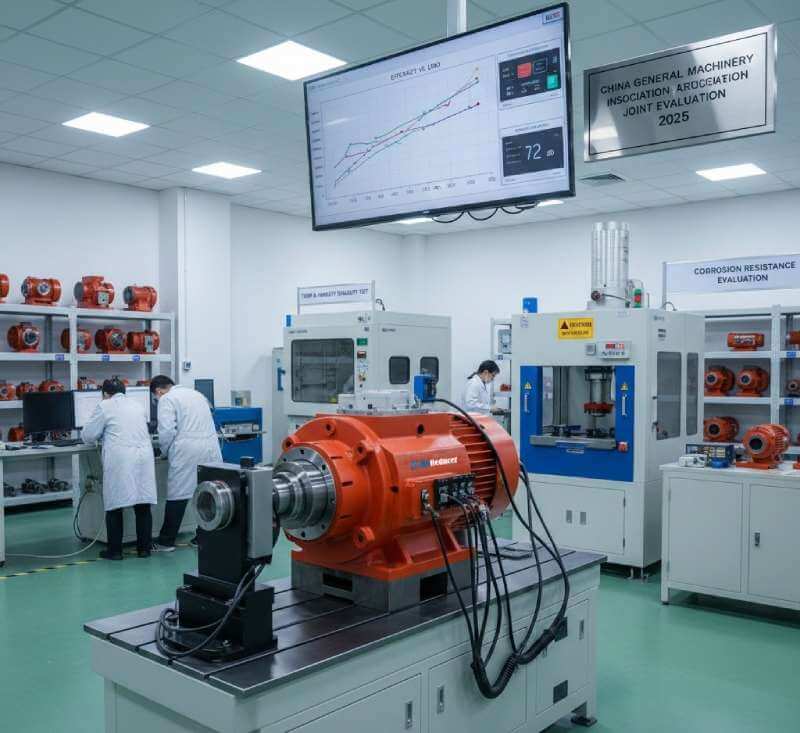
2026 reducer industry

Introduction

Reducers can be seen everywhere across modern industrial scenarios: heavy-duty transportation in metallurgy and mining, precise joint operation of industrial robots, long-term stable transmission of wind power facilities, and automated production lines in various manufacturing industries. They serve as the indispensable cornerstone of modern industrial systems. Driven by global intelligent manufacturing transformation, carbon peaking and carbon neutrality goals and industrialization of humanoid robots, the reducer industry is transforming from quantity growth to quality improvement, with high-end performance, high precision and intellectualization as core development directions. Meanwhile, domestic substitution speeds up. Local enterprises are gradually breaking overseas monopoly in precision reducer sector and stepping into a new cycle of high-quality development.

1. Industry Status: Steady Growth and Noticeable Structural Contradictions

1.1 Continuous Market Expansion

China’s reducer market gained an annual growth of 4.3% in 2025 with a scale of 152 billion yuan, and is expected to reach 167.2 billion yuan in 2026, growing faster than the average level of general equipment manufacturing. The global market size is projected to stand at 1.79 trillion US dollars in 2026. The Asia-Pacific region accounts for over 45% of global market share, and China acts as a major growth hub for the global reducer industry.

1.2 Polarized Product Structure

Conventional reducers represented by R/K/F/S series boast mature technologies and sufficient production capacity. Fierce price competition compresses overall profit margins, accompanied by numerous small and medium-sized manufacturers and low industrial concentration.
High-precision RV and harmonic reducers have long been monopolized by overseas top manufacturers with extremely high technical barriers. Domestic products still fall behind imported counterparts in batch consistency, long-term service life and low-noise operation performance, leading to a relatively low localization rate in the high-end industrial equipment market.

1.3 Competitive Pattern: Global Giants Lead and Domestic Champions Rise

The international high-end reducer market has long been dominated by established overseas industrial transmission brands. In recent years, outstanding domestic manufacturers have achieved key technological breakthroughs in precision reducer research and production. The performance of self-developed high-precision reducers has been greatly optimized, reaching the international advanced level, and domestic products have been widely applied in mainstream industrial robot and intelligent automation equipment supply chains.

2. Core Technologies and Product Lines: Targeted Selection for Practical Use

Classified by transmission principles, reducers are divided into gear, worm gear, planetary, RV and harmonic types with unique structural features and targeted applicable industrial fields.

2.1 Helical & Hardened Gear Reducer

Advantages: 94%-96% transmission efficiency, strong load capacity, outstanding impact resistance and service life exceeding 12,000 hours.
Application: Heavy-duty continuous working conditions such as metallurgy, mining, hoisting, cement and chemical industries.

2.2 Worm Gear Reducer

Advantages: Large single-stage transmission ratio of 10-100, compact structure, self-locking performance when ratio exceeds 15 and low noise.
Application: Conveyor lines, elevators, packaging machinery and low-precision positioning automated equipment.

2.3 Planetary Reducer

Advantages: Small size, light weight, over 97% transmission efficiency, high precision and stable operation.
Application: Automated production lines, robot joints, semiconductor processing equipment and high-precision industrial automation machinery.

2.4 RV Reducer

Advantages: High rigidity, large torque, long service life, impact resistance and high positioning accuracy.
Application: Joint parts of industrial robots, rotary tables of five-axis machining centers and heavy-duty automated industrial equipment.

2.5 Harmonic Reducer

Advantages: Lightweight, compact volume, large transmission ratio, high precision and low noise.
Application: Robot end actuators, surgical medical robots, semiconductor precision equipment and aerospace industrial devices.

2.6 Popular Core Industrial Technologies

Modular integration: Adopts standard combined modules with transmission ratio ranging from 25 to 4000, cutting parts quantity by 30% and shortening overall product delivery cycle.
Zero-backlash technology: Applied in domestic cycloidal reducers to realize positioning accuracy of ±0.01mm, fully satisfying strict demands of high-precision industrial scenarios.
Intelligent operation and maintenance: Combines digital twin and AI predictive maintenance system, reducing equipment failure rate by 70% and supporting real-time remote monitoring and automatic fault early warning.

3. In-depth Analysis of Downstream Applications: Emerging Industries Drive Structural Upgrade

3.1 Industrial Robots: Core Application Market for Precision Reducers

A single six-axis industrial robot is equipped with 6 to 8 RV reducers and 2 to 4 harmonic reducers. One humanoid robot requires 20 to 30 precision reducers, including 14-16 harmonic ones and 6-8 RV ones. The large-scale industrial application and mass production of humanoid robots trigger explosive market demand, and the global precision reducer market will achieve a year-on-year growth of over 20% in 2026.

3.2 Wind Power and Photovoltaic Industry: High Reliability and Long Lifespan Requirements

Wind power spindle reducers need to operate stably without failure for 20,000 hours within a wide temperature range from -40℃ to 60℃ to adapt to harsh outdoor wind field environments. Reducers supporting photovoltaic tracking systems feature low noise, high protection grade and ultra-long service life, perfectly matching long-term outdoor operation demands of photovoltaic power stations.

3.3 Intelligent Logistics, Food and Pharmaceutical Industry

Automatic conveying and sorting equipment in intelligent logistics puts forward strict requirements on frequent start-stop performance, low operating noise and low overall operating cost. Food and pharmaceutical processing machinery requires reducers made of stainless steel, with corrosion resistance, easy cleaning and low dust emission. Hypoid gear reducers are highly compatible with these high-end sanitary industrial scenarios.

4. Domestic Substitution: Breaking Technical Barriers and Advancing High-end Development

4.1 Core Technical Progress

Domestic self-developed harmonic and RV reducers have achieved great technological leaps. Core performance indicators including backlash, output torque and overall service life have reached the international advanced level. Domestic high-precision reducers have been widely adopted by mainstream intelligent equipment manufacturers worldwide.

4.2 Distinct Cost Performance

The price of domestic precision reducers accounts for 30%-40% of imported equivalent products, with transmission efficiency and service life reaching 85%-90% of imported counterparts. Relying on outstanding cost-performance ratio, domestic reducers have achieved rapidly rising market competitiveness in global mid-to-high-end industrial markets.

4.3 Existing Deficiencies in Manufacturing and Materials

The precision grinding process of high-end cycloidal wheels and flexible gears still relies on top-tier overseas ultra-precision processing equipment. More than 60% of core supporting components such as precision steel balls and cross roller bearings still depend on imports. Domestic reducer industry still needs further optimization in batch production consistency and long-term operational stability.

5. Future Trends: Technical Upgrade, Scenario Expansion and Deepened Domestic Substitution

5.1 Technical Trends: High Precision, Integration and Intellectualization

High precision: Products will realize backlash below 0.5 arcminute, positioning accuracy of ±0.01mm and service life over 20,000 hours, fully adapting to iteration demands of next-generation humanoid robots and top-end intelligent industrial equipment.
Integration: Integrated motor-reducer-driver all-in-one structure will downsizes overall equipment volume, improve comprehensive transmission efficiency and reduce overall system operating costs.
Intellectualization: Built-in sensors, digital twin system and AI intelligent algorithms will realize full life cycle condition monitoring, real-time fault warning and automatic predictive maintenance for transmission equipment.

5.2 Market Trends: Booming Emerging Industries and Upgraded Demand Structure

The rapid industrialization of humanoid robots, continuous upgrading of factory industrial automation, and large-scale expansion of global wind power and photovoltaic projects drive surging demand for precise, efficient and highly reliable industrial reducers. Market competition becomes increasingly fierce in mid-to-low-end conventional reducer segments, while high-end precision transmission field turns into the core competition battlefield for global reducer manufacturers.

5.3 Competitive Trends: Higher Industrial Concentration and Stronger Leading Enterprises

Rising comprehensive barriers in core technology, capital investment and professional talent reserve accelerate the market elimination of small and medium-sized manufacturers with weak R&D capacity. Leading domestic enterprises build solid competitive moats via independent technological innovation, large-scale capacity expansion and complete industrial chain layout. The overall domestic substitution path shifts from passive low-end market replacement to active independent high-end technological breakthrough.
The global reducer industry is standing at a critical period of structural upgrading, technological innovation and comprehensive domestic substitution. Oversupply and vicious price competition persist in mid-to-low-end conventional reducer market, while the long-term overseas technical monopoly in high-end precision reducer market is gradually broken by independent domestic research and development. Driven by booming emerging industries including humanoid robots, intelligent manufacturing and new energy power equipment, domestic reducer enterprises with sophisticated manufacturing capacity, independent core technology reserves and excellent cost control advantages embrace unprecedented golden development opportunities. In the future, the global reducer industry will keep advancing toward four core directions: high precision, modular integration, intellectualization and green energy-saving, providing more solid and efficient transmission support for the high-quality upgrading of global modern manufacturing industry.

Get FREE QUOTE Today!

    Your data is always safe with us. We will only contact you in conjunction with your enquiry.